flex circuit manufacturer support medical applications
Flex circuits have become a vital component in the medical industry, supporting a wide range of applications from diagnostic equipment to wearable health devices. Their lightweight, flexible, and compact nature makes them ideal for use in environments where space, reliability, and flexibility are paramount. Flex circuit manufacturers play a critical role in supporting medical applications by providing high-quality, customized solutions that meet the stringent requirements of the healthcare sector. This support is achieved through the careful selection of materials, precision manufacturing processes, and adherence to regulatory standards, all while ensuring that the final product is reliable and durable.
One of the primary ways flex circuit manufacturers support medical applications is by offering customized designs tailored to the unique needs of each medical device. The medical industry often requires specialized solutions to accommodate specific functionalities, such as sensor integration, power management, and data transmission. Flex circuits are designed to meet these needs, enabling manufacturers to create circuits that fit within tight spaces while still delivering reliable performance. For example, in wearable health devices, flex circuits are used to integrate sensors for monitoring heart rate, blood oxygen levels, or glucose, all while maintaining the flexibility to conform to the shape of the body. Manufacturers work closely with medical device companies during the design phase to ensure that the flex circuit fits the device’s form factor and meets the device’s performance requirements.
Additionally, material selection is crucial in medical applications to ensure the safety, durability, and biocompatibility of the flex circuit. Medical flex circuits are often exposed to harsh environments, such as high temperatures, moisture, and chemicals. As a result, the materials used must be able to withstand these conditions without degrading. Manufacturers typically choose high-quality, biocompatible substrates like polyimide or polyester, which offer excellent mechanical properties and resistance to temperature extremes. The conductive materials, usually copper, are selected for their ability to maintain electrical performance under stress and ensure that signals are transmitted without interference. Furthermore, medical-grade materials may be required to meet FDA or other regulatory standards to ensure they are safe for use in medical devices.
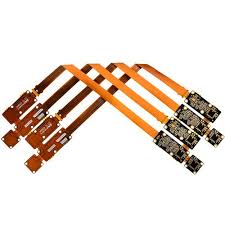
How does a flex circuit manufacturer support medical applications?
flex circuit manufacturer also employ advanced manufacturing techniques to ensure that the final product meets the high standards required in medical applications. These techniques include precision etching, laser cutting, and high-resolution photo-lithography, which allow for the production of complex and intricate circuit patterns with high accuracy. In medical devices, even the smallest defects can result in failures, so these advanced processes help to ensure that each circuit is made to exact specifications. For example, in pacemakers or other implantable devices, the flex circuits must be carefully manufactured to avoid any faults that could jeopardize the device’s performance. Additionally, multi-layer flex circuits, often used in medical devices, allow for complex functionality in a compact form, which is ideal for applications with limited space.
Regulatory compliance is another area where flex circuit manufacturers support medical applications. The medical industry is highly regulated, and manufacturers must ensure that their products comply with various standards, such as ISO 13485 (quality management systems for medical devices) and the FDA’s 21 CFR Part 820 (quality system regulations for medical devices). Flex circuit manufacturers must work closely with medical device companies to ensure that their products meet these regulatory requirements. This includes documentation and traceability of materials, processes, and testing, as well as ensuring that the flex circuits meet electrical and safety standards. Manufacturers may also be required to undergo audits and certifications to demonstrate that their processes comply with the regulatory framework governing medical devices.
Reliability and testing are of utmost importance in medical applications. Flex circuit manufacturers employ rigorous testing protocols to ensure that their circuits perform reliably over the long term. This includes electrical testing to verify that the conductive traces are functioning correctly, as well as mechanical testing to assess the circuit’s flexibility and durability under stress. Medical flex circuits are often exposed to extreme conditions, such as high heat or radiation, and must maintain their performance throughout the life of the medical device. Therefore, manufacturers conduct stress tests, such as thermal cycling, vibration testing, and humidity testing, to simulate real-world conditions. By thoroughly testing the circuits before they are integrated into medical devices, manufacturers ensure that they will function reliably in demanding environments.
Lastly, miniaturization is a key factor in medical applications, and flex circuit manufacturers are well-equipped to address this challenge. Medical devices, particularly implantables and wearable devices, require circuits that are not only flexible but also compact and lightweight. Flex circuits are ideal for this purpose because they can be easily shaped to fit within the tight confines of small, complex devices. By using advanced materials and manufacturing techniques, manufacturers can produce high-density flex circuits with numerous layers, allowing for more functions in a smaller space. This enables the creation of compact medical devices that are comfortable for patients to wear and use, without compromising on performance or reliability.