Key Components of PCB SMD Assembly
Surface-mount technology (SMT) is a construction method of fitting components directly to the surface of a printed circuit board. It has replaced the traditional through-hole technology method of fitting components because it allows for increased manufacturing automation which reduces costs and improves quality. It also allows more components to fit on a given area of substrate. SMT assembly can also be used for components that are not suitable for through-hole construction, such as large transformers and heat-sinked power semiconductors.
SMT PCBs require specialized equipment for mounting the various electronic components. This is because they have very small dimensions and lead spacings, which make them difficult to handle manually. The specialized equipment must have a high degree of accuracy for mounting the components. This is why the mounting process requires the use of solder paste and optical alignment systems.
Integrated circuits are the main component of pcb smd assembly, since they are responsible for a wide variety of functions within the device. They can perform the duties of amplifiers, microprocessors, oscillators, and timers among other things. Moreover, they are very reliable and can be manufactured in large quantities. They are extremely useful and necessary for the creation of many devices that we use in our daily lives.
Chip resistors are the second most common component of a PCB smd assembly, and they are commonly found in digital circuits. The resistance value of a chip resistor is determined by its three-digit number, where the first and second digits indicate its significant values while the third digit indicates a multiple of 10.
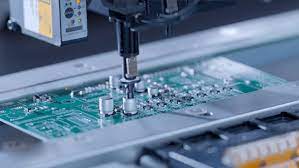
What Are the Key Components of PCB SMD Assembly?
Capacitors are essential to a PCB smd assembly, as they store and release electric energy corresponding to their capacitance. Capacitors can be made from different materials, but the most commonly used ones for SMT are ceramic multilayer capacitors. These are available in multiple types, such as X7R, Y5V, and C0G (NP0).
Besides the above-mentioned components, SMT assembly also uses a variety of other components. These include resistors, capacitors, diodes, and inductors. In addition, SMT assemblers also use fuses and thermistors to protect the circuit board against overheating.
SMT assemblers must be trained in the proper handling of these components. Traditionally, they have used tweezers to pick the components up and place them on the PCBs. This is a labor-intensive process that requires great skill to avoid mistakes. However, automated robotic pick and place machines have eased the work for assemblers.
The pcb smd assembly process begins by reading the Gerber file, which contains all the information regarding the design of the PCB. This includes the placement position, size, and specification of each component. It is important to check this file for any issues that may negatively affect the functionality of the finished product, which is known as a Design for Manufacturability (DFM) check. This is because a bad design can significantly affect the production quality and cost of the final product. If any errors are detected during this phase, they can be corrected by using a special tool called a rework station.